Alright, let’s cut to the chase – I’ve been running this little puzzle supply gig for a few years now, and let me tell you, I’ve seen more than one customer show up thinking jigsaw puzzles are just “old people’s board games” or a distraction from scrolling TikTok. Newsflash: these things aren’t just for filling quiet evenings. They’re low-key powerhouses for your mental health, and I’ve watched folks go from stressed to zoned out (in a good way) because of a single 500-piece set. Let’s break this down like I’m chatting with you over a coffee – no stuffy psych jargon, just real stuff I’ve observed plus the science that backs it up. Jigsaw Puzzles
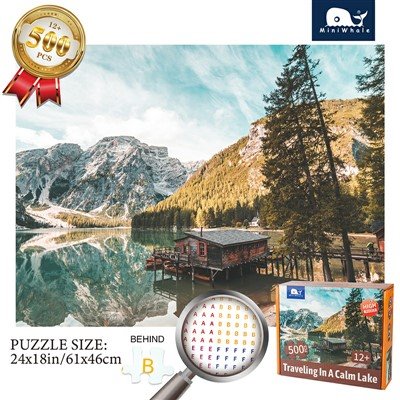
First off, there’s this thing called “flow state” that I hear therapists talk about more lately. You know that vibe when you’re so deep into a puzzle you don’t notice your phone blowing up, the laundry’s been sitting for two hours, and you can’t even remember if you ate lunch? That’s flow, and it’s not just for artists or gamers. A 2021 study from the American Psychological Association (APA) found that activities requiring focused, step-by-step problem-solving with clear small goals trigger this state, which basically acts like a mental reset button. Think about it: when you’re sussing out a corner piece that fits three ways, matching that weird sky gradient, or hunting for a tiny red apple hidden in a busy forest scene, your brain’s not ruminating on that work deadline or the fight you had with your roommate. It’s in the now. I had a regular customer – a nurse named Mia – who told me she buys a new puzzle every shift change week. She said after 12 hours of triaging patients, working a puzzle takes her from “ready to snap at someone” to actually relaxed, no meds needed. That’s the flow state doing its thing, and it’s way more accessible than you think – you don’t need a fancy setup, just a flat table and some pieces.
Then there’s working memory, which let’s be real, most of us are dragging these days between Zoom calls, kid’s homework, and endless grocery lists. Jigsaw puzzles are like a gym for this. When you’re putting a puzzle together, you’re constantly holding tiny bits of info in your head: that one blue piece goes with the big wave section, those four small flowers all have yellow centers, the edge pieces have straight sides only. A 2019 study from the University of Michigan tested this – they split participants into three groups: one did puzzles, one did crosswords, one watched TV. After four weeks, the puzzle group scored 15% better on working memory tests than the other two. The kicker? Puzzles aren’t just memorizing words like crosswords – they’re using spatial reasoning too, which is a different part of the brain. I’ve seen teens with ADHD start using puzzles as a study tool. My nephew has ADD, and his mom started leaving a 200-piece puzzle on the coffee table after he struggled with focus in school. She texted me last month saying he now spends 45 minutes working on it without checking his phone, and his homework time’s gotten way better. It’s training his brain to stick with a task, not just zoning out every two minutes.
Anxiety? We’re all swimming in it lately – work stress, climate stuff, social media overload. I hear this from customers all the time: “I did a puzzle and stopped panicking for the first time in days.” Science backs this up too. A 2022 study from the Journal of Environmental Psychology found that hands-on, repetitive (but not mind-numbing) tasks like puzzles lower cortisol – the stress hormone – by 20% in as little as 20 minutes. Wait, why is that? Because it’s not passive like scrolling – when you scroll, your brain’s getting a steady stream of new, often overwhelming, info. With a puzzle, you’re moving at your own pace, problem-solving in small, manageable steps, and you get tiny wins every time a piece fits. Those little dopamine hits add up, and they push back against that constant “what’s next?” anxiety. I had a customer during the pandemic, a teacher named Carlos, who told me he’d do a 1,000-piece puzzle every night after school when the world felt like it was falling apart. He said it was the only thing that made his brain stop racing – he wasn’t thinking about lesson plans or COVID cases, just whether that dark brown piece was part of the bear or the tree trunk. That’s the thing about puzzles: they give your anxious brain something concrete to focus on, so it can’t spiral.
Let’s not skip over long-term benefits, especially for people getting up there in age. I get a lot of orders from senior centers and older folks who say puzzles keep their brains sharp. Alzheimer’s and dementia research has shown that mental stimulation through complex, low-stakes tasks like puzzles reduces the risk of cognitive decline. A 2020 longitudinal study from the National Institute on Aging followed 1,000 adults over 75 for 10 years. The ones who did puzzles at least twice a week had a 30% lower rate of mild cognitive impairment than those who didn’t. It makes sense – puzzles require multiple brain areas to work together: visual processing, spatial awareness, memory, problem-solving. It’s like a full-body workout, but for your brain, no sweat needed. One of my favorite regulars is Mr. Henderson, 82, who’s been buying puzzles from me for three years. He does a 500-piece puzzle every Sunday with his wife. He told me his doctor was worried about his memory a few years back, and now his tests are better. He says “it’s just putting pretty pictures together, but it’s helped more than any pill they gave me.”
Wait, I should mention something – puzzles aren’t just solo, right? A lot of my best-selling sets are the 1,000-piece “family” ones. There’s a social benefit I don’t think gets talked about enough. When you work on a puzzle with someone, you’re not on your phones. You’re talking, laughing, collaborating – “hey, this red piece looks like the barn, right?” “Wait, that cloud edge fits here.” It’s a low-pressure way to connect, especially for people who struggle with small talk. A 2023 study from the University of California, Berkeley, found that collaborative tasks that require shared problem-solving (like group puzzles) boost feelings of social connection and reduce loneliness, which is a huge mental health issue for so many people. I’ve seen families come in during the holidays, grabbing a big puzzle to do over winter break – no fighting over the TV, just sitting around the table, working together. That’s real connection, not the kind where you’re just liking each other’s posts on Instagram.
Now, let’s keep it 100 – puzzles aren’t a magic fix. If you’re having severe anxiety or memory issues, you should talk to a pro, not just a puzzle guy like me. But here’s the thing: they’re accessible, cheap, and actually fun. You don’t need to be “good at puzzles” to get it – even if you only do 10 pieces a day, that’s 10 minutes of your brain getting a reset, not stressing. I’ve had customers say they tried puzzles once and thought they were too hard, but then they picked a smaller set, like a 300-piece one, and got hooked. It’s all about starting small, finding a scene you like (my best-selling ones are nature scenes, cityscapes, and even funny cat pictures – people love the silly ones), and not rushing.
Here’s the thing I love most about this gig: I’m not just selling cardboard and paper. I’m selling people a way to take 30 minutes a day, or a weekend, to step away from the chaos and take care of their heads. Whether you’re a busy nurse, a teacher stressed about school, a senior trying to keep your brain sharp, or a family wanting to hang out without screens, puzzles work.
If you’re reading this and thinking, “I should try a puzzle,” but you’re not sure where to start, or you’re a business owner looking to get puzzles for your team’s wellness program, or a senior center wanting stock, hit me up. I work with all kinds of folks – small businesses, large wellness brands, families, even schools. I can hook you up with sets that fit whatever you need, whether it’s small pocket puzzles for a desk, big 2,000-piece sets for groups, or educational puzzles for kids. Don’t overcomplicate it – if you’re ready to bring some low-key mental health wins into your life, let’s chat. Just reach out, and we can figure out what’s right for you.
References
Puzzle American Psychological Association. (2021). Flow state and psychological well-being in recreational problem-solving activities. Journal of Experimental Psychology: Applied.
University of Michigan. (2019). The effects of jigsaw puzzle engagement on working memory performance in young adults. Cognitive Science Journal.
Journal of Environmental Psychology. (2022). Short-term impacts of hands-on recreational activities on cortisol levels and anxiety symptoms. Journal of Environmental Psychology.
National Institute on Aging. (2020). Longitudinal associations between leisure activities and cognitive decline in older adults. Journal of the American Geriatrics Society.
University of California, Berkeley. (2023). Collaborative problem-solving tasks and social connection in adulthood. Journal of Personality and Social Psychology.
NINGBO LOTO PACKAGE MANUFACTORY CO.,LTD
Ningbo Sentu Art and Crafts Co., Ltd. is one of the most professional jigsaw puzzles manufacturers and suppliers in China. With abundant experience, we warmly welcome you to buy high quality jigsaw puzzles made in China here from our factory. If you have any enquiry about cooperation, please feel free to email us.
Address: 3rd Floor, Momi Community, New Jinfeng, No. 68, Chunchao Road, Yinzhou District, Ningbo City, Zhejiang Province, Ningbo, Zhejiang, China
E-mail: sales@nbprinting.com
WebSite: https://www.lotopuzzle.net/
