Hey there, if you’re scrolling through this wondering if a boring old carton packing machine can actually be tailored to your specific line of work, I’m glad you stopped by. Let me cut to the chase: for the past 7 years, I’ve run a small (but scrappy) carton packing machine supply business, and I can’t tell you how many times I’ve gotten that exact question from clients—usually right after they’ve tried a off-the-shelf machine that fell flat on their production floor. Let’s dive into this, no corporate jargon, just real talk from someone who’s seen both sides. Carton Packing Machine

First off, let’s kill the myth that all carton packing machines are one-size-fits-all. A few months back, I worked with a craft chocolate maker out in Portland. They didn’t just pack chocolate bars—they packed mini 2oz truffle boxes, seasonal advent calendar sets, and bulk cases of their single-origin bars. The off-the-shelf machine they’d bought from a big box supplier couldn’t handle any of it: it either crushed the delicate truffle boxes (because the suction cups were too strong) or jammed when it tried to fit 24 tiny calendars into a medium carton. They were wasting 3 hours a day re-jamming and fixing errors, plus losing about $1,200 a week in damaged product. That’s when they came to me, and we spent 3 days mapping their exact process: speed (they needed 40 packs a minute, not the 20 the standard machine did), carton sizes (they went from 3 different shapes to 7 depending on the product), and even the way their operators liked to load materials. We customized every part: swapped the oversized suction cups for soft rubber grippers that never crumpled truffle boxes, adjusted the feed track to fit narrow calendar blanks, and added a quick-change dial so they could switch between carton sizes in 90 seconds instead of the 20 minutes the standard machine took. Six months later, they’re down to 15 minutes a day of maintenance, no damaged product, and production is up 35%. That’s the thing—customization isn’t a luxury for big companies. It’s the only way small and mid-sized businesses keep up.
Wait, let’s clarify what “customization” actually means here, because a lot of people think it’s just adding a logo or a color to the machine. That’s not it. Real customization is about solving specific pain points no off-the-shelf machine can touch. Let’s break down the different types I do, so you get a sense of what’s possible. First, there’s functional customization—this is what I did for the chocolate maker. It’s adjusting core parts: feed systems, grippers, speed controls, even the size of the carton forming heads. Another example: a baby food supplier I worked with. They had to pack glass jars, so the standard machine’s carton edges were too sharp, and the stacking mechanism couldn’t handle the weight of 12 glass jars. We rounded the edges of the forming station and added a weight sensor that would pause the machine if a stack was too heavy, so no broken jars. Then there’s integration customization— a lot of businesses have existing lines: conveyor belts, labeling machines, quality checkers. If you just drop a random machine in, it won’t sync. I had a snack company that used a robotic arm to pick their chips and put them into cartons, but their old packing machine couldn’t line up with the arm’s output. We modified the machine’s infeed sensor to match the arm’s signal, so now the whole line runs without a single misalignment. No more manual transfers, no more bottlenecks. The third type is operator-centric customization. Not everyone is a tech genius. I work with a cat litter brand that had new operators every few months because of high turnover. Their old machine had 12 different setting buttons, which led to mistakes. We simplified the control panel to 3 big dials: carton size, speed, and start/stop. If they need to switch products, we pre-programmed the settings so they just select “tray packs” or “bulk bags” and go. No confusing code, no training that takes 2 days. That’s customization that actually works for the people using the machine every day.
Now, let’s talk about why so many suppliers push back on customization, and why that’s a mistake. I’ve had clients tell me, “My last supplier said customization is impossible—‘our machines are built for standard use.’” To that I say: that’s because they’re a volume supplier, cranking out 100 machines a month, not a small supplier that builds 5-10 a month, focused on unique needs. The big guys don’t have the flexibility to adjust for every little variable. But here’s the truth: every business has variables. Let’s list a few that are super common: product fragility, carton size/shape, production speed, existing line compatibility, operator skill level, even facility constraints (like if your factory has a 10ft ceiling and the standard machine is 11ft tall—yes, that’s a real problem I solved last year for a coffee roaster in Brooklyn). Another myth: customization is way more expensive. Sure, if you’re only making one machine from scratch, it costs a bit more upfront. But when you factor in less downtime, less damaged product, higher production, it pays for itself in 3-6 months. The chocolate maker I mentioned earlier spent an extra $2,800 on customization, but saved that in the first two weeks from no damaged product. And over a year, they saved $45,000 on labor and lost production. Compare that to buying a standard machine that would have caused them to switch suppliers entirely within a year—costing them way more.
Wait, but let’s be real—customization isn’t for everyone. If you’re making a single product, with a single carton size, on a steady production line, a standard machine might be fine. But if you’re anything like 70% of the clients I work with: you have multiple product lines, varying carton sizes, or a bottleneck that’s eating into profits, then customization is the only way to fix it. I learned this early on when I first started out. My first machine sale was to a soap maker who made bar soaps and liquid soap travel packs. The standard machine I sold them jammed 5 times a day, and they called me in a panic. I sat down with them, mapped their needs, and built a customized machine that handled both products, reduced jams to once a week, and increased their output by 25%. That’s when I realized: I wasn’t selling machines, I was selling solutions. And that’s the secret most big suppliers don’t get—customization isn’t a line item, it’s listening to what your actual problem is, not just selling a product.
Let’s walk through what the process actually looks like, so you know it’s not some vague promise. When a client reaches out to me with a “can this be customized?” question, here’s what happens next: first, I schedule a call (or even a site visit if they’re local). We don’t talk specs first—we talk pain points. “What’s making your line slow?” “What’s damaging your product?” “What takes forever to change over?” I ask all those stupidly specific questions: what’s the temperature in your factory? Do your operators wear gloves (that affects gripper choice)? How often do you run different products? That stuff matters more than you think. Next, I put together a rough design and a ballpark quote, no hidden fees. We tweak that design together—maybe they want to add a label applicator, or make the carton forming station a bit wider for a future product line. Once we lock in the design, we build the machine, test it at my shop with their actual products, not just sample materials. I send them videos of it running, so they can see how it handles their specific truffles or glass jars before it even gets to their factory. Then we install it, train their team, and stay in touch for 6 months—no extra charge, in case they need small tweaks after it’s up and running. That’s how I do it, and that’s how you should expect it to work if you’re working with a supplier that knows their stuff.
I get it—there’s a lot of sketchy suppliers out there that promise customization and then deliver a machine that’s half-baked. So here’s what to look for: a supplier that asks you for actual samples of your product and cartons, not just generic specs. A supplier that will test the machine with your materials before installation. A supplier that doesn’t charge exorbitant fees for small changes. And most importantly, a supplier that actually listens to your problems, not just tries to upsell you a standard machine. Last month, a small pet food brand came to me saying they had a machine that worked for dry kibble but couldn’t handle wet food pouches. I told them full customization would cost more, but a few small tweaks (changing the grippers and adjusting the speed) would do the job for way less. They took that, and now they’re running 30% more wet food than before. That’s the kind of thinking that makes customization worth it—not just adding parts, but smart tweaks that solve your exact problem.
Let’s circle back to the original question: Can a carton packing machine be customized? The answer is a resounding yes—but only if you work with the right supplier, and you’re not just looking for a fancy label or a color change. It’s about building a machine that fits your line, your products, your team, and your bottom line. I’ve seen small businesses blow up because their custom machine eliminated their biggest bottleneck, and I’ve seen big businesses save millions by customizing existing lines instead of buying new ones. It’s not some futuristic technology—it’s just problem-solving, same as any other part of running a business.
If you’re sitting there right now, staring at a machine that’s costing you money from downtime, damaged product, or slow speeds, don’t settle for the off-the-shelf option. Don’t let a big supplier tell you “customization is too hard” or “it’s not worth the cost.” Reach out, tell me your specific pain points, and we can figure out if a customized machine is right for you. I’ll even send you a free quote and a test video of how a customized machine would handle your products, no strings attached. Because at the end of the day, my job isn’t to sell you a machine—it’s to help your business run smoother, faster, and make more money. That’s what real customization is all about.
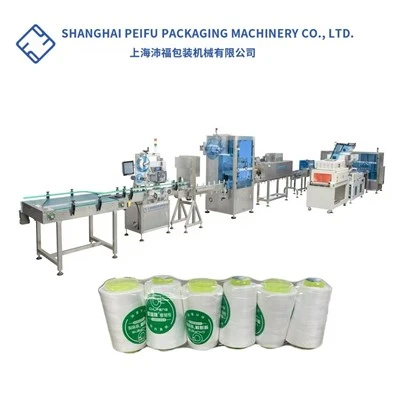
If you’re ready to stop fighting with a carton packing machine and start one that works for you, get in touch today. Let’s talk through your exact needs, no jargon, no pressure, just real solutions for your business.
Small Tube Sewing Thread Packaging Machine References
- Industrial Packing Machinery Association. (2022). Customization Trends in Packaging Equipment for Small-to-Medium Enterprises.
- Journal of Manufacturing Systems. (2021). The Economic Impact of Customized Packaging Solutions on Production Efficiency.
- Small Business Administration. (2023). Cost-Benefit Analysis of Customized Industrial Equipment for Manufacturing Lines.
Shanghai Peifu Packaging Machinery Co., Ltd.
We are one of the leading manufacturers and suppliers of carton packing machine in China. With a professional production team, we are able to meet the needs of the majority of our customers. Please rest assured to buy customized carton packing machine from our factory.
Address: No.1111, Xinlin Road, Fengxian District, Shanghai, China
E-mail: cathychensupplier@gmail.com
WebSite: https://www.peifupackaging.com/
