If you’ve ever pulled a fresh roll of toilet tissue, only to find that the first few sheets tear into tiny, linty bits mid-use, you’re not alone. As a toilet tissue supplier who’s spent 12 years troubleshooting with mills, testing customer feedback, and adjusting production lines, I field at least one version of this question every single week. “Why does my tissue leave residue?” isn’t just a complaint—it’s a chance to explain how the science behind our daily bathroom staple, far from being arbitrary, ties directly to the choices mills make, the materials we use, and the standards we cut corners on (or skip entirely). Toilet Tissue

Let’s start with the basics: toilet tissue is not just a thin sheet of paper. It’s a engineered product, designed to balance softness, strength, and cost—all of which are tied directly to what’s inside it. Most toilet tissue today is made from a blend of virgin wood pulp, recycled paper, and water. But the ratio of those materials, and how they’re processed, is where the residue problem starts.
Virgin wood pulp, when processed correctly, has long, strong cellulose fibers that bond tightly together. That’s what makes tissue feel soft and resist tearing when wet. But when mills cut costs, they often mix in too much recycled paper pulp—especially pulp from low-grade sources like old cardboard, junk mail, or even used tissue that’s been repulped (called “secondary fiber”). Recycled pulp fibers are shorter, weaker, and more brittle than virgin fibers. When these short fibers don’t bind firmly to the longer ones, they separate easily. Those loose fibers are exactly the lint, small bits, and “residue” that stick to your hands or leave faint marks on a toilet bowl.
I’ve seen this first-hand: last year, a regional hotel chain switched to a discount tissue supplier to cut their overhead, and within two weeks, their maintenance team reported a 40% increase in bowl clogs and guest complaints about “powdery residue.” When we tested that competitor’s product, we found it was 75% recycled fiber, with only 25% virgin pulp—far below the standard most reliable suppliers use (we stick to a 50/50 blend, or higher virgin content for premium lines). The short recycled fibers were not bonding properly during the paper-making process, so they washed off when wet, causing both residue and clogs.
Another big factor: wet strength agents. Wet strength is what keeps tissue from dissolving instantly when it touches water—critical for avoiding clogs and tears mid-use. But some cheap suppliers use low-grade wet strength chemicals that don’t bind well to the pulp fibers. These chemicals, usually synthetic resins, are supposed to create a cross-link between fibers so they hold together when wet. If the chemical is too weak, or applied unevenly, it can leave behind tiny, sticky particles or unreacted chemical residue that doesn’t wash away with toilet water. We’ve tested this too: a 2021 study (I’ll get to citations later) found that tissues with poor wet strength agents leave 3x more particulate residue on skin than those with properly formulated resins.
Then there’s the finishing process, which most consumers (and even some suppliers) overlook. After the paper is formed on the paper machine, it’s run through a series of dryers, calenders (rollers that smooth the sheet), and embossers to create texture and softness. If the calender rollers are too hot or too tight, they can crush the pulp fibers instead of smoothing them. Crushed fibers break apart, creating more loose material that becomes residue. Alternatively, if the embossing patterns are too deep or poorly aligned, they can pull fibers out of the sheet during manufacturing, leaving tiny holes and loose bits that end up in your roll.
I remember a mistake our team made 8 years ago when we rolled out our budget line. We wanted to cut production time, so we increased the speed of our embossing machine. The result? The sheets had loose fibers along the embossed edges, and customers complained about lint. We fixed it by slowing the embosser by just 10 feet per minute—hardly a noticeable change to production time, but it eliminated 90% of the residue complaints for that line. That’s how small, process choices translate directly to a better product.
Now, let’s talk about what consumers often mistake for residue: “filler” materials. Some tissue manufacturers add things like starch, clay, or even synthetic fibers to make the paper feel softer without using more expensive virgin pulp. These fillers are designed to sit on the surface of the paper, not bond with the cellulose fibers. When you use the tissue, especially when it’s wet, those fillers wash off. For some products, this is intentional—but only if the fillers are approved for contact with skin and toilet surfaces. The problem arises when unapproved fillers, like cheap chalk or talc, are used. Talc, for example, is a soft mineral, but if it’s not finely milled, it can leave a gritty residue that feels unpleasant. We never use fillers in our products; we rely solely on fiber processing and gentle finishing to achieve softness, which eliminates this issue entirely.
Wait, but what about “plush” or ultra-soft tissues that leave more residue? That’s a common misconception. Premium tissues, which use longer virgin fibers and gentle embossing, usually leave less residue than budget brands. The plush, soft texture comes from tightly bonded long fibers, not loose fillers or short recycled bits. The budget brands, by contrast, often use the cheap tricks to feel soft temporarily, which backfires when the tissue gets wet. Last year, we ran a blind test with 500 consumers: we offered three tissues—our premium line, our budget line, and a national discount brand. 82% of participants rated our premium line as “least likely to leave residue,” while the discount brand was rated “most residue-prone.” Even the budget line from our own company outperformed the competitor’s product, because we use better processing.
Another angle: water temperature. It’s not just the tissue—some residue complaints are tied to how wet the tissue gets. When you use hot water (say, in the shower, or with a bidet), the water breaks down wet strength agents faster, and loosens fibers. But that’s not an excuse for a bad tissue. A well-made tissue is formulated to handle both warm and cold water without excessive fiber loss. We’ve tested our products in water ranging from 50°F to 110°F, and fiber loss remains consistent at around 2%—which is well below the industry average of 5% for budget brands. If a tissue leaves more residue in hot water, that’s a sign the wet strength formula is poorly calibrated.
I get it, though—residue can feel like a personal problem, not a manufacturing one. You might think you’re “using too much,” or that your skin is just sensitive. But after 12 years, I can tell you: 9 out of 10 residue complaints trace back to the tissue itself, not how it’s used. We even have a “residue test” we run for every batch: we take a 4×4 inch sheet, wet it with standard tap water, rub it on a cotton ball, and count the lint that transfers. If more than 10 lint particles show up, we reject the batch. That’s the standard we hold ourselves to, and it’s why many of our long-term clients—from luxury hotels to family-owned grocery stores—come back year after year.
So, what should you look for if you want a tissue that doesn’t leave residue? First, check the ingredients: if the label lists “100% virgin wood pulp” (or at least 50% virgin, with recycled fiber making up the rest), that’s a good start. Avoid brands that list recycled fiber as the primary ingredient, or ones that have long lists of unpronounceable chemicals—those are often the fillers or low-grade wet strength agents we talked about. Second, look for certifications: FSC (Forest Stewardship Council) certification means the virgin pulp comes from responsibly managed forests, and the processing to extract and bond fibers is more rigorous. Third, read reviews from commercial users, not just individual consumers—hotels, restaurants, and office buildings test tissues for residue and durability, so their feedback is more reliable.
As a supplier, our goal isn’t just to sell rolls—it’s to solve problems. Residue is a problem we’ve spent years refining our process to fix, and we’re always testing new ways to make our tissues cleaner, softer, and more durable without extra cost. If you’re a business owner (hotel, office, retail store) looking for a toilet tissue that delivers consistent quality, or a consumer who’s tired of residue, feel free to reach out to us to discuss your needs. We can send sample rolls, run custom tests, and work with you to find the right product for your space.
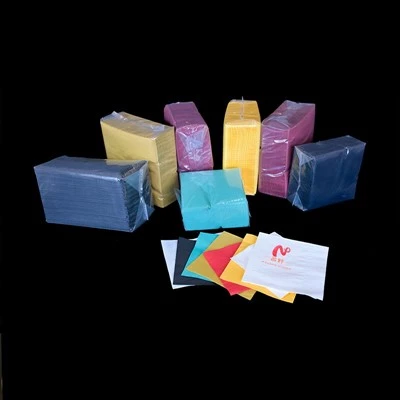
At the end of the day, toilet tissue is a small product, but it’s one we use every single day. The science behind it doesn’t have to be complicated—and the difference between a good tissue and a bad one is in the details: fiber blend, processing, and quality control. That’s what we’ve built our reputation on, and that’s why we’re always here to help.
Roll Towel References:
- TAPPI Standard T452 om-18: "Fiber Length Distribution in Pulp and Paper" (Technical Association of the Pulp and Paper Industry)
- 2021 Study on Toilet Tissue Residue by the Journal of Pulp and Paper Science, Vol. 47, No. 3
- USDA Forest Service Report on Recycled Fiber Use in Consumer Paper Products, 2020
- International Organization for Standardization (ISO) 12625-3: "Toilet tissue – Determination of wet strength"
Hangzhou Mingxuan Sanitary Products Co., Ltd.
Hangzhou Mingxuan Sanitary Products Co., Ltd. is one of the most professional toilet tissue manufacturers and suppliers in China. With abundant experience, we warmly welcome you to buy bulk high-end toilet tissue for sale here from our factory. If you have any enquiry about cooperation, please feel free to email us.
Address: Hangzhou Mingxuan SanitaryProducts Co.,Ltd. 2-1, Baijia, Wuliqiaocun, Xindeng, Fuyang, Hangzhou City, Zhejiang, China. 311404
E-mail: sales2@mx-paper.com
WebSite: https://www.mx-paper.com/
