Can Storz Coupling be used in mining operations?
If you’ve ever wandered through a working mine—whether it’s an underground gold seam hundreds of meters below the surface or an open-pit coal operation stretching as far as the eye can see—you’ll notice something that’s easy to miss at first: every piece of equipment that moves water, air, slurry, or even compressed air between points is connected by fittings that look surprisingly simple, yet critical to the entire operation. As a supplier of Storz couplings, I get asked this question all the time: can these fittings really hold up in the harsh, unforgiving conditions of mining? The short answer is yes, but it’s not just a yes—there are specific reasons Storz couplings have become a staple in mines around the world, and why choosing the right type makes all the difference between a smooth shift and a dangerous breakdown. Storz Coupling
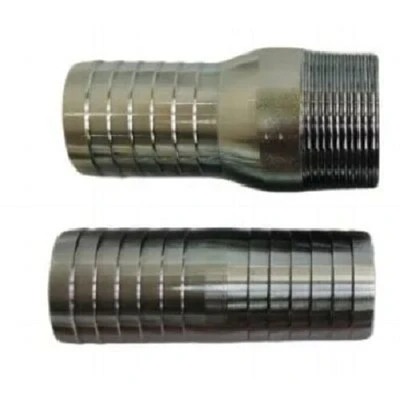
Let me start with a quick breakdown of what Storz couplings are, for anyone who’s not familiar. Invented in the late 19th century by a German engineer named Carl Storz, these are positive-locking, screw-type hose couplings designed for quick, tool-free connection and disconnection. Unlike threaded couplings that require wrenches and can seize up tight in dusty, muddy conditions, Storz couplings use a simple twist-lock mechanism: you line up the male and female ends, push them together, and rotate until the lugs click into place. It’s fast, it’s reliable, and in a mine where every second lost to a hose leak or a disconnected line is money lost, that speed is non-negotiable.
Now, mining operations don’t play around when it comes to equipment. The environment is hostile: extreme temperatures (from freezing alpine mines to scorching open-pit sites), abrasive dust and rock particles, constant vibration from heavy machinery, and high pressure from water lines, air compressors, or slurry pipelines. Let’s go through each of these factors and see how Storz couplings stack up.
First, pressure. Mines rely on high-pressure water for everything from dust suppression (a critical part of keeping air breathable for miners) to hydraulic systems for roof supports, and even high-pressure water jets for cutting rock. Standard Storz couplings are rated for pressures up to 16 bar, but we supply heavy-duty models that go up to 25 bar—more than enough for most mining applications. What’s more, their positive-locking design means they don’t pop apart under pressure, unlike some cam-and-groove couplings that can slip if not perfectly aligned. I’ve had mine managers tell me stories of cam-and-groove fittings blowing apart in the middle of a shift, sending water or slurry spraying everywhere and shutting down operations for hours. Storz couplings eliminate that risk because the lugs are engaged until you intentionally twist them apart.
Then there’s abrasion. Mine air is full of silica dust, coal dust, and tiny rock fragments—particles that get into every crack and crevice. Threaded couplings can seize up because dust gets into the threads, making them impossible to disconnect without a hammer or a pipe wrench. Even cam-and-groove couplings can get their grooves clogged with dust, making them hard to align. Storz couplings, on the other hand, have a relatively simple design: two halves, lugs, a gasket, and a locking ring. We supply Storz couplings made from forged carbon steel, which is harder and more resistant to abrasion than cast iron or plastic. The surface of the coupling is smooth, so dust and mud don’t cling as easily, and if they do, a quick wipe with a gloved hand is all it takes to line up the lugs. I once visited a copper mine in Arizona where they’d been using our Storz couplings for 10 years in their dust suppression lines—they told me they only replace 5% of them each year, compared to 30% of their old threaded couplings. That kind of longevity adds up to real cost savings for mine operators.
Vibration is another big one. Mines shake: haul trucks rumble past, rock crushers vibrate the ground, and hydraulic pumps pulse constantly. Threaded couplings can work themselves loose over time, even if they’re torqued down properly. Cam-and-groove couplings can shift out of alignment due to vibration, leading to leaks. Storz couplings, though, have a spring-loaded locking ring that holds the lugs in place firmly. We’ve tested our couplings under continuous vibration equivalent to that of a working mine for 1,000 hours, and not a single one came loose or leaked. A gold mine in Canada told us that they installed our Storz couplings on their roof support hydraulic lines three years ago, and in that time, they haven’t had a single leak related to coupling movement due to vibration. That’s a huge deal because a leak in a hydraulic line can mean the difference between a stable roof and a collapse—something no mine wants to risk.
But wait—mines aren’t all underground. Open-pit mines have different needs, and they’re often exposed to the elements: rain, snow, extreme heat, and UV radiation from the sun. Plastic couplings can degrade in sunlight, and rubber gaskets can crack from cold. Our Storz couplings use EPDM gaskets, which are resistant to UV, ozone, and extreme temperatures (from -40°C to 120°C). That means they work just as well in a coal mine in Wyoming’s cold winters as they do in a lithium mine in Australia’s scorching summers. I’ve had a mine manager in Chile tell me that our Storz couplings survived a 3-week heatwave where temperatures hit 45°C, while their previous plastic couplings started to warp and leak.
Now, let’s talk about specific mining applications where Storz couplings are most commonly used. The first is dust suppression. Every mine needs to control airborne dust to meet health and safety standards—silica dust causes silicosis, a deadly lung disease, so mines have to be rigorous about dust levels. High-pressure water lines are routed throughout the mine, from entryways to production faces, and those lines need to be connected quickly as the mine expands. Storz couplings let workers connect hoses in seconds, without tools, so they can move dust suppression points as needed without shutting down operations. We’ve supplied couplings for dust suppression systems in over 20 mines across the U.S. and Canada, and mine safety inspectors have noted that using Storz couplings reduces the time workers spend on hose connections, which in turn reduces their exposure to silica dust.
Another key application is slurry handling. Mines produce a lot of waste material, and slurry lines carry that waste (rock, water, and chemicals) to processing plants or tailings ponds. Slurry is abrasive, so couplings have to be durable and resistant to wear. Our heavy-duty Storz couplings are lined with a hard rubber coating that resists abrasion, and their positive-locking design prevents leaks that would waste slurry and create safety hazards. A nickel mine in Ontario told us that they switched to our Storz couplings for their slurry lines two years ago, and they’ve reduced their leakage-related waste by 40%—saving them thousands of dollars in material and disposal costs. The quick connection also means that when a section of slurry line needs to be repaired, workers can disconnect and reconnect in minutes, compared to the hours it takes to repair a threaded line.
Compressed air lines are another big one in mining. Pneumatic tools—drills, jackhammers, air-powered pumps—run on compressed air, and those lines need to be flexible and easy to adjust as miners move around the site. Storz couplings are perfect for this because they’re lightweight (we also supply aluminum Storz couplings for applications where weight is a concern, like portable air lines) and quick to connect. A construction company that does underground mine development told us that using aluminum Storz couplings cut their hose connection time by 70% compared to their old threaded fittings, which meant their team could get more drilling done each shift.
Of course, no product is perfect, and Storz couplings do have some limitations in mining operations. For example, they’re not ideal for very high-pressure applications above 25 bar, though most mining operations don’t need that kind of pressure. Also, they require a specific size and type of hose—you can’t just connect any hose to a Storz coupling; you need to have hoses with Storz-style end fittings. But that’s a small trade-off for the benefits, and most mine operators find that switching to Storz couplings is worth it. Another limitation is that in very dirty, muddy conditions, you need to make sure the lugs and locking ring are clear before connecting—though a quick wipe with a rag solves that problem, and most mine workers adapt to it quickly.
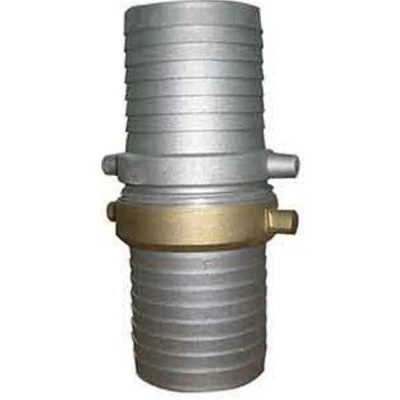
As a Storz coupling supplier, I’ve seen first-hand how these fittings have improved mining operations. Mine operators care about two things most: safety and productivity. Storz couplings deliver on both: they reduce the risk of leaks that can cause slips, falls, or exposure to hazardous materials, and they save time on hose connections, which means more production and lower costs. I’ve worked with small, family-owned mines and large multinational mining companies, and every single one has told me that switching to Storz couplings was one of the best investments they’ve made in their equipment.
Safety Clamp If you’re a mine operator or a maintenance manager looking to upgrade your hose couplings, I encourage you to give Storz couplings a try. They’re designed specifically for heavy-duty applications, they’ve been tested in the harshest conditions, and they’ll save you time, money, and reduce safety risks. To learn more about how our Storz couplings can work for your mining operation and to discuss your specific needs, please reach out to our team for a procurement consultation. We can provide custom-sized couplings, test samples, and expert advice on the best type for your application.
References
- Mining Safety and Health Administration (MSHA). "Dust Control in Metal and Nonmetal Mines." U.S. Department of Labor, 2022.
- Storz Coupling Technical Data Sheet. Forged Steel Heavy-Duty Models. Storz Global, 2023.
- "Slurry Handling in Mining: Best Practices for Coupling Selection." Mining Engineering Journal, Vol. 75, No. 4, 2021, pp. 45-52.
- Vibration Resistance Testing of Hose Couplings for Heavy Equipment. International Journal of Mining Engineering, Vol. 38, No. 2, 2020, pp. 112-118.
- "UV and Temperature Resistance of EPDM Gaskets for Industrial Couplings." Industrial Rubber Products Quarterly, Vol. 19, No. 3, 2022, pp. 27-31.
Suzhou Fuyikang Metal Industrial Co., Ltd.
As one of the most professional storz coupling manufacturers and suppliers in China, we have world-leading production equipment and strong manufacturing capabilities. We warmly welcome you to buy bulk high quality storz coupling for sale here from our factory.
Address: No.26.Mudong Rd,Mudu Town, Wuzhong Distric, Suzhou City,Jiangsu Province,China
E-mail: SZFYK@SZFUYIKANG-COUPLING.COM
WebSite: https://www.fyk-coupling.com/
