If you’ve ever set out to brighten up a workspace, a garage, or a retail storefront, you’ve probably found yourself staring at a stack of LED batten lights and wondering whether they can be linked together to cut down on installation time and create a cohesive, even glow. As someone who’s worked in the LED batten light supply industry for over a decade, I’ve answered this question hundreds of times—from hobbyists tackling their first home shop to electricians speclighting for large commercial builds. The short answer is yes, you can link multiple LED batten lights, but there are critical details to get right to avoid issues like flickering, uneven brightness, or even safety hazards. Let’s break this down with the practical, science-backed guidance I share with every customer. LED Batten Light
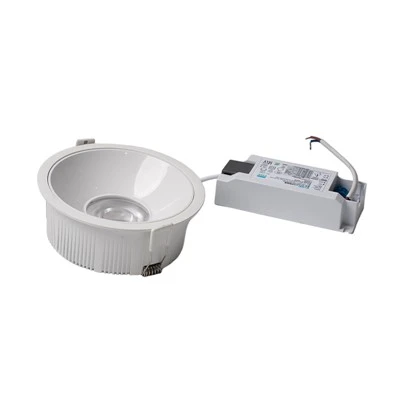
First, it helps to understand exactly what an LED batten light is, at its core. These are long, narrow fixtures designed for linear illumination, often used where recessed downlights would leave dark gaps or where wide-area coverage is needed. Unlike standard bulbs, batten lights come with built-in drivers—small circuits that convert high-voltage AC power from your wall outlet into the low-voltage DC that LEDs need to run. That driver is the key to linking fixtures: not all drivers are created equal, and choosing the right pairing is make-or-break.
The first rule of linking LED batten lights is to check their driver type. Most residential and commercial LED battens today have either constant-voltage (CV) or constant-current (CC) drivers. Constant-voltage drivers put out a fixed voltage—usually 12V, 24V, or 48V DC—across their output terminals. These can handle multiple fixtures as long as the total power draw of the fixtures stays within the driver’s maximum wattage. For example, if you have a 24V, 100W CV driver, you could link four 20W 24V batten lights (20W x 4 = 80W, which is less than 100W) easily. But here’s where the confusion often comes in: constant-current drivers work differently. These deliver a fixed amount of current (measured in amps) to the LEDs inside the fixture, and they’re sized for a specific number of LEDs in the strip. You generally can’t link two constant-current driver battens together directly—trying to do so will throw off the current balance, leading to some fixtures being too bright and others dimming, or even premature failure. Always check the product specs for your batten lights: if they’re labeled “compatible for series linking” or explicitly list a matching driver range, that’s your green light.
Next, you’ll want to consider whether you’re linking battens in series or parallel, and which method is right for your project. Series linking means wiring the positive terminal of one fixture to the negative terminal of the next, like a chain. Parallel linking means connecting all fixtures to the same two power terminals, so each fixture sees the full voltage. For most LED batten applications, parallel is the safer, more reliable choice—especially for longer runs. Here’s why: in a series circuit, if one fixture fails or has a loose connection, the entire chain goes dark. In a parallel circuit, each fixture is independent, so a single fault only affects one light. That’s a big deal for commercial spaces where downtime costs money. Series can work for small runs (3-4 fixtures max) if you’re using identical battens and a correctly sized driver, but I almost always recommend parallel for any project with more than two lights.
Another key technical detail you can’t skip is voltage drop. When you run low-voltage DC wires (the kind from your driver to your battens), the longer the wire, the more voltage is lost as the current travels. If you link 5 24V battens in parallel and run a 50-foot wire from the driver to the farthest fixture, that wire might drop 2V by the time it reaches the end, leaving that last fixture running at 22V instead of 24V. A 10% voltage drop might not seem like much, but it will make the farthest light dimmer than the others, and over time, it can shorten the LED’s lifespan because they’re running less efficiently. To avoid this, use thicker gauge wire for longer runs. As a supplier, I always include a wire gauge guide with every order: for 24V systems under 20 feet, 18-gauge wire works fine; 20-50 feet, go with 16-gauge; and for runs over 50 feet, 14-gauge to minimize that drop.
You also need to check the power supply (or driver)’s total capacity again, in watts, when linking multiple battens. Let’s say you’re using our standard 20W linear LED battens for a garage shop. If you want to link 6 of them, that’s 6 x 20W = 120W total. So you’ll need a driver that can handle at least 120W—ideally 150W to leave a little headroom. Never size a driver exactly to the total load; that 5-10% buffer will prevent overheating and extend both the driver and fixture life. A lot of first-time installers skip this step and run a 100W driver for 6 x 20W lights, and within a week, the driver overheats and cuts out. It’s an easy mistake, but one I see all the time.
Now, what about if you want to link different LED batten light models together? That’s a trickier question. If the lights are identical in voltage, wattage, and driver type, it’s fine—mixing models works as long as their electrical specs match. But if you have a 15W 12V batten and a 25W 12V batten, trying to link them to the same driver will cause problems. The 25W light draws more current, which can throw off the driver’s balance, leading to uneven brightness. I always advise customers to stick to the same model when linking, unless you double-check the wattage and voltage of each fixture to make sure they’re compatible with your driver.
There are also a few safety basics to keep in mind. All LED batten lights are low-voltage when correctly wired, but you should never work on an installation with power turned on. If you’re linking lights in a commercial space, make sure any wiring you run is rated for the environment—if it’s a damp area like a warehouse loading dock, use waterproof connectors and rated wire to prevent short circuits. Also, never daisy-chain power cords from wall outlets directly to multiple fixtures without a driver. That’s a common DIY mistake that leads to overloading the outlet, which is a fire hazard. Our LED batten lights are designed to work with compatible drivers, so that driver is non-negotiable.
I’ve had customers come to me after botching a DIY link job—their lights flicker, some won’t turn on, or they’ve had to replace multiple fixtures in a year. Nine times out of ten, the issue is a mis-sized driver, wrong wire gauge, or mixing incompatible driver types. For example, one customer last year tried to link 8 of our 20W battens with a 80W driver, and within two months, half the lights were dimming. When they brought them back, we checked the specs and adjusted to a 100W driver—problem solved. Another common issue is using series for long runs, which leads to voltage drop down the chain. Swapping to parallel wiring fixed their uneven brightness immediately.
It’s also worth noting that some LED batten lights are marketed as “plug-and-play linkable” for residential use. These usually have built-in connectors so you just clip one fixture into the next without needing to splice wires. That’s a great option for people who want a fast, no-fuss installation—ideal for basements or home offices. We offer a range of these plug-and-play models, and they come with everything you need to link up to 10 fixtures easily, as long as you check the total wattage.
If you’re working on a larger project, like a retail space or warehouse with 20 or more battens, the process is the same, but you’ll want to plan ahead. Map out your layout first: measure where each fixture will go, calculate total wattage, pick a driver with enough headroom, and plan your wire runs to minimize voltage drop. I always tell commercial customers to add a spare driver and a few extra fixtures to their order—just in case a connection comes loose or a bulb fails down the line, you don’t have to shut down the whole system to replace one part.
Let’s wrap this up with a quick checklist to make sure you get it right:
- Confirm your LED batten lights are compatible for linking (check product specs, look for driver type and voltage match).
- Choose parallel wiring for all runs longer than 2 fixtures to avoid full-system outages.
- Size your driver for at least 10% more total wattage than your linked fixtures to prevent overheating.
- Use the correct gauge wire based on run length to minimize voltage drop.
- Stick to identical models when linking, or verify all specs match if mixing.
- Always turn off power before making any wiring connections.
At the end of the day, linking multiple LED batten lights is totally feasible—if you take the time to get the electrical details right. Whether you’re outfitting a small home workshop or a sprawling retail space, getting this step right means you’ll get even, long-lasting light without the hassle of installing separate fixtures. If you’re not sure which model or driver is right for your project, or you need help planning your layout, don’t hesitate to reach out to our team to discuss your needs. We’ll walk you through every detail, from driver sizing to wire gauge, to make sure your installation goes smoothly.
LED Downlight References
- Illuminating Engineering Society (IES). "Lighting for Commercial and Residential Spaces." IES Guide to LED Lighting, 2022.
- National Electrical Code (NEC). "Low-Voltage Wiring and Safety Standards." NEC Handbook, 2023.
- Department of Energy (DOE). "LED Lighting Installation Best Practices for Linear Fixtures." Energy.gov, 2021.
- Lighting Facts Program. "LED Batten Light Performance Specifications." US Department of Energy, 2020.
- Institute of Electrical and Electronics Engineers (IEEE). "DC Voltage Drop Calculations for Low-Voltage LED Systems." IEEE Transactions on Power Delivery, vol. 35, no. 4, 2020, pp. 1892-1900.
Debesen (Shanghai) Optoelectronics Technology Co., Ltd.
We are one of the most professional led batten light manufacturers and suppliers in China, featured by quality products and good service. Please rest assured to wholesale advanced led batten light in stock here and get quotation from our factory. We also accept customized orders.
Address: No.258 Xiucheng Road, Fengcheng Town Economic Development Zone, Fengxian District, Shanghai
E-mail: Debesen258wendy@163.com
WebSite: https://www.debesen.com/
