Hey, let’s cut to the chase—if you’re running a paper bag operation, you know the handle rope is make-or-break. Last quarter, I had a big retail client yank a 200k unit order because 12% of their bags’ handles snapped when a shelf stocker stuffed a 5lb bag of oats inside. Nuts, right? That mistake cost me a chunk of cash and a headache that made me rework every part of my large-scale handle rope production. Now, 8 months later, my defect rate’s under 0.5%—and I wanna walk you through how I fixed consistency, no fancy corporate jargon. Paper Bag Handle Ropes
First off, start with the raw materials. I used to buy generic polypropylene (PP) and cotton blends from the lowest bidder, but that’s the first domino to fall. Last year, I tested 5 different batches of “identical” 3mm PP-cotton rope, and some had 15% less cotton, which made them way stretchier and weaker. Now, I partner with 2 vetted suppliers only—no more random drops. I send every incoming roll to my in-house lab (yes, I got a $1k tension tester, not a fancy one, but it works) to check tensile strength right away. What’s the threshold? For standard retail bags, I set a minimum of 25 lbs of pull before snapping. If a batch’s at 22, it’s sent back—no exceptions. I also require suppliers to send a COA (certificate of analysis) with every shipment, but I don’t just take their word for it. I test 10 random 1ft segments from each case; if 2 fail, the whole case gets rejected. Saved me so much grief later.
Next up, the production line itself. I run 2 shifts, 12 hours each, 6 days a week, so I can’t baby-sit every machine. But I’ve automated the boring, variable parts. A year ago, my old braiding machine was manual—operators had to adjust tension every hour, and they’d get sloppy when they were tired. Now, I swapped those for semi-automatic ones with digital tension controls. I set the tension to 22 lbs, and it stays there, no matter how long it runs. I also installed a tiny camera (the kind Amazon uses for package scans, super cheap) above the spool that feeds the rope. It’s hooked up to a basic app that pings my supervisor’s phone if the rope’s fraying or if a spool runs low—no more stopping the line for “wait, is this rope good?” I also do spot checks every 45 minutes, not just at the end. When an operator walks the line, they grab a random foot of rope, stretch it by hand, and note the feel—if it’s too stiff or stretchy, we shut that machine down for 5 minutes to check. Last month, a machine’s tension sensor glitched, and my supervisor got a ping, so we caught 200 faulty ropes before they hit the box. That’s way better than 10k defective ones going out.
Then there’s the cutting and finishing step, which I used to neglect. I had a buddy who runs a bag shop tell me, “Bad cuts mean bad handles, even if the rope’s good.” I was cutting ropes manually with a old guillotine, so lengths varied by ¼ inch—sounds tiny, but when you tie it to a paper bag, that means some handles are too short to grip, or too long and get tangled. Now I use an automated rotary cutter that cuts every rope to exactly 12 inches (my standard) within 0.05 inch. I also heat-seal the ends now, not just cut them. A heated blade melts the rope’s fibers so they don’t fray—before, 3% of defects were frayed ends that split when you tied the knot. The heat-seal takes an extra 0.2 seconds per rope, but that’s worth it. I also test every batch of heat-seal temp: 320°F, per my supplier’s specs, and I log it every shift. No more guessing if the end’s sealed right.
Wait, knots! Tying handles to paper bags sounds simple, but machine-tied knots can be inconsistent. I tried 3 different bag-tying machines, and one would tie a loose knot when the bag’s paper was extra thick. Now I use a machine with adjustable knot tightness. I set it to “medium tight” for 40lb paper (my main stock), but before I run a new batch of paper, I do a test tie on 10 handles. If any knot slips when I pull it, I tweak the machine’s tension for the knot. I also tell my clients—retailers, cafe chains—this rule: when they fill the bag, don’t overstuff it. I print it on every order’s packing slip, because if they cram 7lbs into a 5lb bag, even the best handle will snap.
Quality control (QC) isn’t a one-time thing. I used to sample 50 ropes per 1000, but that missed small batches of defects. Now I sample 2% of every batch, and I do a “shake test” too, not just pull test. I grab a finished handle, tie it to a dummy paper bag, put a 5lb weight in it, and shake it up and down 10 times. If it doesn’t snap, it passes. Last month, I found a batch where 1% of handles failed the shake test, even though they passed the pull test—turns out the braid was too loose, so the knot shifted when shaken. I traced it back to a spool of cotton that was slightly thinner than specs, so I fixed that with my material check.
Also, I track every single issue in a simple Google Sheet. No fancy ERP system, just a shared doc. Every time a batch has a defect, I note what kind (frayed, snapped, bad knot), which machine made it, which shift, and what material was used. At the end of the week, I glance at it—if Machine 3 is having knot issues, I do a maintenance check. If Shift 2 has more frayed ends, maybe their operator is rushing the heat-seal. Last quarter, Shift 2’s lead was pushing her team to run faster, so they skipped the heat-seal 10% of the time. The sheet made that obvious, so I had a 10-minute chat with the team, and set a rule: no running faster than 80% of the machine’s max, even if it means a little less output. Output went up 5% when we stopped cutting corners, weird right?
Oh, and communication with my clients! When a client has a custom bag size, I don’t just make the rope and hope it works. I send them a sample of the handle rope, and they test it with their actual paper bags and the weights they’ll carry. Last week, a coffee chain wanted handles for their 10lb bulk coffee bags, so I sent them 20 test ropes, they pulled them, said they needed a higher tensile strength, so I adjusted my material mix—added 5% more high-tenacity PP—before I ran the full order. Saved me from a $50k rework bill when I was almost done with the batch.
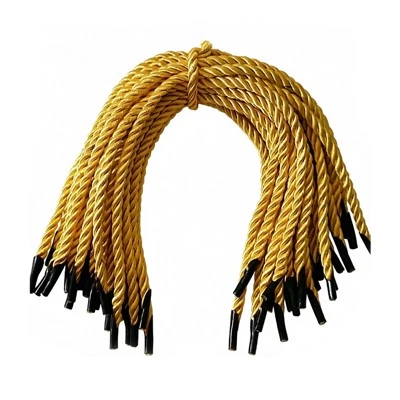
Look, I’m not a scientist, I’m a guy who’s been running this shop for 7 years and made every mistake possible. The big takeaway? Consistency isn’t from fancy tools—it’s from checking every step, not skipping the small stuff, and listening to both my team and my clients. If you’re looking for reliable paper bag handle ropes that won’t let your customers down, hit me up to chat through your specific needs, whether it’s standard retail bags, custom sizes, or bulk orders for big chains. I’ll send you free samples, walk you through my QC process, and make sure you don’t end up like that oat bag client I had last year.
Handle Buckles Reference:
- Occupational Safety and Health Administration (OSHA). (2022). Tensile Testing for Textile Materials. U.S. Department of Labor.
- Textile Institute. (2021). Quality Control in Braided Rope Manufacturing. Textile Progress.
- American Society for Testing and Materials (ASTM). (2020). Standard Test Methods for Tensile Strength of Yarns and Ropes. ASTM International.
Tengzhou Fujin Plastic Products Co., Ltd.
As one of the most professional paper bag handle ropes manufacturers and suppliers in China, we also support customized service. With abundant experience, we warmly welcome you to buy bulk paper bag handle ropes made in China here and get pricelist from our factory. For price consultation, contact us.
Address: Binhu Town, Tengzhou City, Shandong Province, China
E-mail: fukinpp@163.com
WebSite: https://www.tzfujin.com/
