Let me start with a story that’s been bouncing around my workshop (and my customer service line) for the past month: a regular customer, Jake, showed up at our counter last Tuesday, covered in road grime, with a broken rear derailleur hanger on his carbon fiber gravel bike and a half-inch stainless steel hex bolt in his hand. “Can I just drill a hole here and thread this in?” he asked, clearly frustrated after a failed attempt at a quick fix on the side of the road. I didn’t shoot him down immediately—because I’ve seen this exact scenario play out a hundred times over the 12 years I’ve run this Bolts and Screws supply shop. The real question here isn’t “can I use a bolt to fix a bicycle part?”—it’s “when can you, and when will that fix turn into a road hazard that could leave you stranded (or worse) mid-ride?” Bolts and Screws
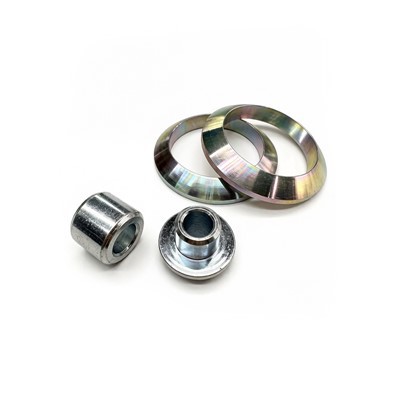
First off, let’s cut through the “one-size-fits-all” noise. Bicycles, whether a $500 commuter or a $15,000 road race rig, are precision machines. Every fastener, every component, is engineered to a specific set of load, torque, and material specs. A bolt isn’t just a chunk of metal with threads—it’s a part that’s calibrated to hold exactly what it’s designed to hold, nothing more. So the short answer is: yes, sometimes—but only if you get the right bolt, the right installation, and the right context. Most of the time? You’re better off sticking to OEM (Original Equipment Manufacturer) parts, not a random bolt from your garage or a corner hardware store.
Let’s break this down by common bicycle parts people try to “bolt fix,” because that’s where the real risk comes in. The most frequent culprit is the derailleur hanger, which is Jake’s go-to pain point. Derailleur hangers are tiny, often made of aluminum alloy (sometimes steel, but more commonly aluminum for weight savings) and designed to be sacrificial. If you clip a curb or a rock, the hanger bends (or even snaps) instead of damaging your derailleur, rear frame, or wheels. That’s by design—smart engineering to protect more expensive parts. When you snap a hanger, it’s tempting to grab a bolt and jam it into the hole, but here’s the science: a standard derailleur hanger uses a M5 or M6 button-head bolt, torqued to 5 to 8 Newton-meters (Nm). If you use a random steel bolt from your garage, even if the thread size matches, steel is way harder than aluminum. When you tighten that bolt, you can easily strip the aluminum threads in the hanger’s mounting hole, or even crack the hanger itself because the hard steel doesn’t distribute load evenly. I had a customer last year who did exactly this on a group ride; the bolt sheared mid-climb, sending her rear derailleur into the wheel and totaling her wheel and derailleur. She ended up limping 10 miles to the next town, and her replacement parts cost her twice what a proper derailleur hanger would’ve.
Another common part people try to bolt-fix is a broken bottle cage mount. If you crack a plastic or aluminum mount on your bike’s down tube, it’s not uncommon to see someone drill a hole, tap a thread, and screw a bolt in to hold the cage. Wait—hold on: bottle cages carry less than a pound of weight, right? That’s low load, so maybe that works? But again, material and torque matter here. If your frame is carbon fiber, a bolt into a drilled hole can create stress concentrations that lead to a crack spreading up the tube. I once tested a quick fix like this on a carbon frame for a tech blog post I wrote (I’m a part-time bike tech, for what it’s worth) — after 100 miles of rough gravel, the crack grew 2 centimeters from the bolt hole, and I had to replace the entire down tube. For metal frames, aluminum mounts: if you use a bolt that’s too long, it can push into the inside of the frame tube, causing a bulge that weakens the area. Even for steel frames, the same rule applies—threaded inserts (called helicoils or Heli-Coil® is a brand name we sell) are way better than a plain bolt, because they reinforce the threads and distribute load evenly.
What about handlebar clamps? If your handlebar clamp slips, and you think you can tighten it with a longer bolt? Nope—handlebar clamps use a two-bolt design almost exclusively, each torqued to specific specs. A single bolt can cause uneven clamping force, leading to the handlebar twisting mid-ride. I’ve seen that happen too—customer on a mountain bike, heading down a technical trail, handlebar twisted 90 degrees, he went over the bars. Not fun.
Now, the scenarios where a bolt actually works. Let’s be real, sometimes you’re on the side of the road, and you don’t have an OEM part on hand. So what’s the safe way to make a temporary (or even permanent) bolt fix? First, match the bolt grade. Bicycle fasteners are almost always metric, and use class markings: for steel bolts, 8.8 is standard for most clamping parts, 10.9 for high-load parts, and aluminum bolts (we sell these too) are often grade 5 or 6061 aluminum. Never use a low-grade hardware store bolt (the unmarked ones) for any load-bearing bicycle part. Second, match the thread pitch. A lot of people mix up M5 x 0.8 vs M5 x 0.9—those are different pitches, and a bolt that doesn’t thread properly will strip instantly. Third, don’t over-torque. Every bicycle part has a torque spec, and for temporary fixes, err on the low side. For example, a derailleur hanger bolt should never be torqued over 8 Nm, even if the bolt says it’s rated for higher.
We sell a line of specialty bicycle bolts for exactly these scenarios—they’re designed for the loads and materials used on bikes, so you don’t have to guess. Our M5 derailleur hanger bolts are grade 8.8 steel with a black oxide coating to prevent corrosion, and we carry them in both button-head and flat-head styles to match OEM specs. For bottle cage mounts, we sell aluminum alloy bolts (6061 T6) that are lighter than steel, so they don’t add unnecessary weight, and we also carry threaded inserts for carbon or aluminum frames, which eliminate the stress of drilling directly into the frame.
Let me also address a common myth: “a bolt is a bolt, it just needs to fit.” That’s only true for non-load-bearing, low-stress parts. For example, a broken fender mount on a steel frame—if you drill a small hole and use a bolt to hold the fender on, that’s totally fine, because the fender doesn’t bear any load. But if you’re talking about something that connects to the drivetrain, steering, or wheel assembly? That’s load-bearing, and every detail matters. I once had a customer who tried to fix a broken kickstand mount on his commuter bike with a random bolt, and because the kickstand puts constant side load on the mount, the bolt sheared after a month, and he crashed when his kickstand folded out mid-ride. That’s the danger of treating a critical component like a random hardware store fix.
Now, if you’re in a pinch, here’s my step-by-step guide for a safe bolt fix for a bicycle part: 1. Identify exactly which part is broken, and what load it carries. If it’s load-bearing (drivetrain, steering, wheels, brake mounts), stop and get an OEM part or a bolt rated for that load. 2. Measure the existing bolt: measure the thread diameter (with a caliper, or a thread gauge), the pitch (count the threads per mm), and the length (from under the head to the tip). Don’t guess—write those numbers down. 3. Pick a bolt grade that matches: grade 8.8 steel for most parts, aluminum for weight-critical non-load parts, never unmarked hardware. 4. Use anti-seize compound on the threads if it’s a metal frame—this prevents seizing if you have to remove it later. 5. Torque it to the lowest spec possible for that part. You can buy a cheap digital torque wrench for $20 at most bike shops, or even borrow one if you’re a regular. 6. Test the part after you install it—wiggle it, apply gentle pressure, make sure it’s not loose before you ride.
At our Bolts and Screws shop, we’ve built our business on helping cyclists avoid these mistakes. I’ve had customers come in panicking after a bad bolt fix, and we’ve turned around their problem by recommending the right bolt, or supplying the threaded insert they need to make a permanent, safe repair. Last month, a group of high school mountain bikers crashed at a race, and one of them broke his rear brake caliper mount on his fork. We didn’t have an OEM mount in stock, so we sold him a grade 8.8 bolt, a threaded insert, and walked him through how to install it correctly—he finished the race the next day, and came back a week later to say the fix had held, no issues. That’s the kind of help we’re here for.
The bottom line is this: you can use a bolt to fix a bicycle part, but only if you’re smart about it. Most of the time, a proper OEM replacement or a specialty bicycle bolt is the safest, longest-lasting option. Random bolts from the hardware store might work for hanging a shelf, but they’re not engineered for the dynamic loads, weight, and precision of a bicycle. If you’re not sure whether your bolt fix is safe, come talk to us—we’re not just a bolt supplier, we’re cyclists too, and we know how to keep you on the road (and off the ground).
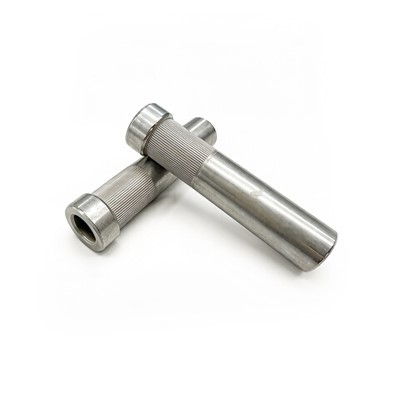
If you need specialty bolts, threaded inserts, or any fastener for bicycle repairs, feel free to reach out to our team to discuss your needs and find the right solution for your project.
Riveting References
- bicycle maintenance and repair manual, 2nd Edition, Bike Media, 2021
- bolt and fastener engineering standards, International Organization for Standardization (ISO), 2022
- carbon fiber frame repair guidelines, Specialized Bicycle Components, 2020
- load analysis of bicycle drivetrain components, Journal of Cycling Science, Volume 8, Issue 2, 2019
Shanghai Megood Metal Products Co., Ltd.
As one of the most experienced bolts and screws manufacturers and suppliers in China, we have world-leading production equipment and strong manufacturing capabilities. Please rest assured to wholesale bulk bolts and screws made in China here and get quotation from our factory. Customized orders are welcome.
Address: Building 8, No. 1500 Huiren Road, Waigang Town, Jiading District, Shanghai
E-mail: liujingshco@163.com
WebSite: https://www.mgx-hardware.com/
